

Scrapping a car in London used to mean navigating a maze of unlicensed dealers, cash-only operations, and prices that somehow changed between the phone call and the collection day. It was a chore nobody wanted, made worse by people who treated it like an opportunity.
So we built something different. scrapcar.london is a fully licensed, fully transparent scrap car collection service — the kind that actually does what it says it will, pays what it quoted, and handles the paperwork so you don't have to think about it again.
No cash in a brown envelope. No price renegotiation on the doorstep. No wondering whether the DVLA notification actually happened. Just a straightforward service that treats you like an adult.
An Authorised Treatment Facility (ATF) is a vehicle processing site licensed by the Environment Agency to legally handle end-of-life vehicles. The licence isn't a rubber stamp — it requires specific equipment for fluid recovery, approved storage for hazardous materials, and ongoing compliance with environmental regulations.
Not all scrap dealers are ATFs. Many operate without the required licences, which means no Certificate of Destruction for you, no DVLA notification, and no guarantee your car isn't being stripped in someone's backyard.
All scrap cars collected by scrapcar.london are processed through our ATF-licensed facility. You get a proper Certificate of Destruction, a clean DVLA record, and the knowledge that your car has been handled legally and responsibly.
The ELV (End of Life Vehicles) Regulations require a minimum 85% recovery rate and 80% recycling rate for every vehicle processed. We consistently exceed these targets — because doing it properly isn't a stretch goal, it's just how the process works when it's done right.
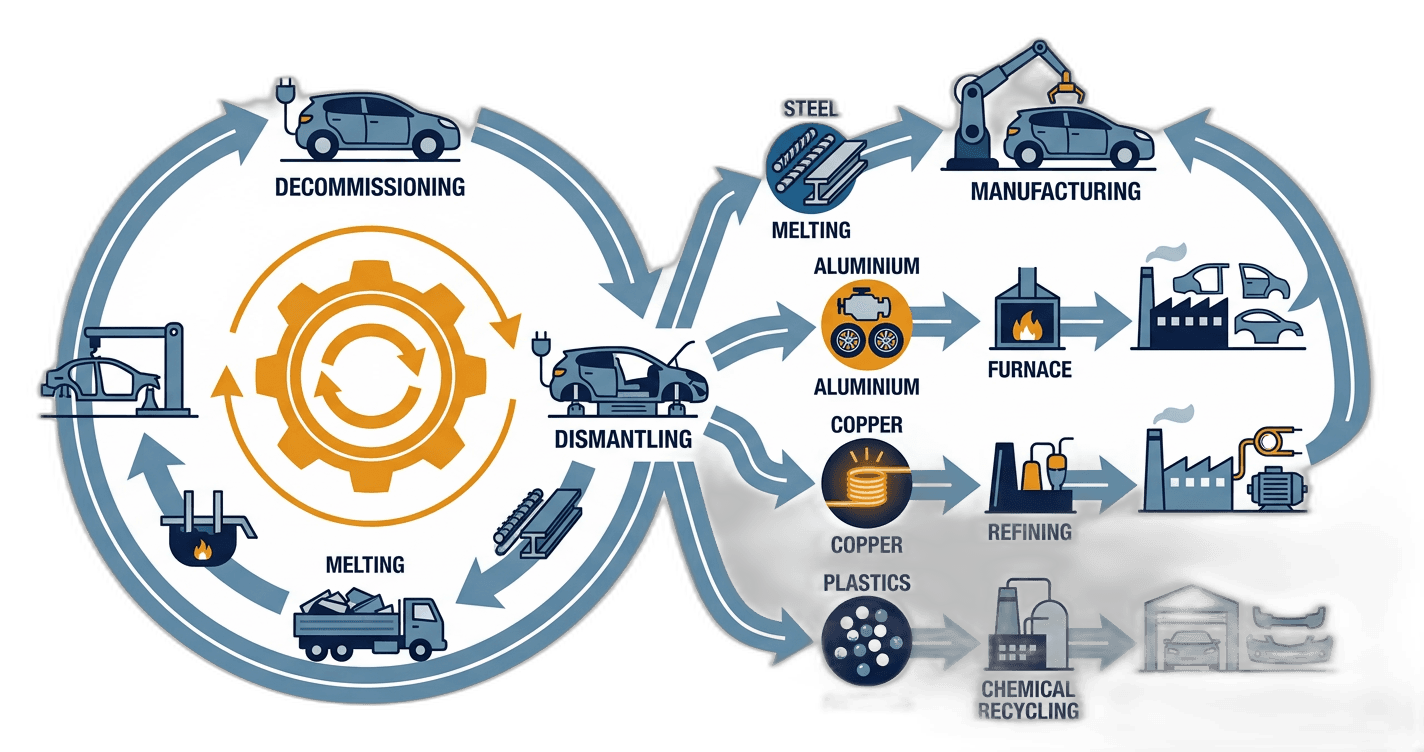
Every car goes through depollution first: all fluids drained and recovered, hazardous materials safely removed, tyres and batteries separated for specialist processing. Then usable parts are salvaged — a working alternator going into another car is better recycling than smelting it down. Finally the shell is shredded, with steel, aluminium, and other metals separated for raw material recycling.
It's not particularly exciting. It's just the right way to do it — and we think that should be the baseline, not a selling point.
We're happy to answer any questions about our process, licensing, or pricing before you commit to anything.